The Biological Reality of Cut Stems
When a flower is severed from its subterranean root bulb or greenhouse rootstock, it loses its continuous intake of groundwater and protective root filtration enzymes. From that exact moment, the stem engages in a race against atmospheric air intrusion (embolism) and bacterial multiplication within the vase water.
Bacteria reproduce exponentially in standing, room-temperature water. Within 36 hours, bacterial colonies form a microscopic slime layer over the cut ends of the stem, plugging the micro-capillaries of the xylem. Even if your vase is filled to the brim, the blooms starve of moisture and keel over. Understanding how to manage xylem conductivity is the secret to sustaining living Dutch arrangements past fourteen days.
The Five Tenets of Dutch Master Floristry
Vessel Hygiene (The Bleach Baseline)
A vessel must be clean enough to drink from. Rinse vases with hot water and a mild non-chlorine soap, rubbing interior walls with a bottle brush to scour away microscopic residue from previous flowers. Rinse thoroughly with cold tap water.
The 45-Degree Bevel Cut
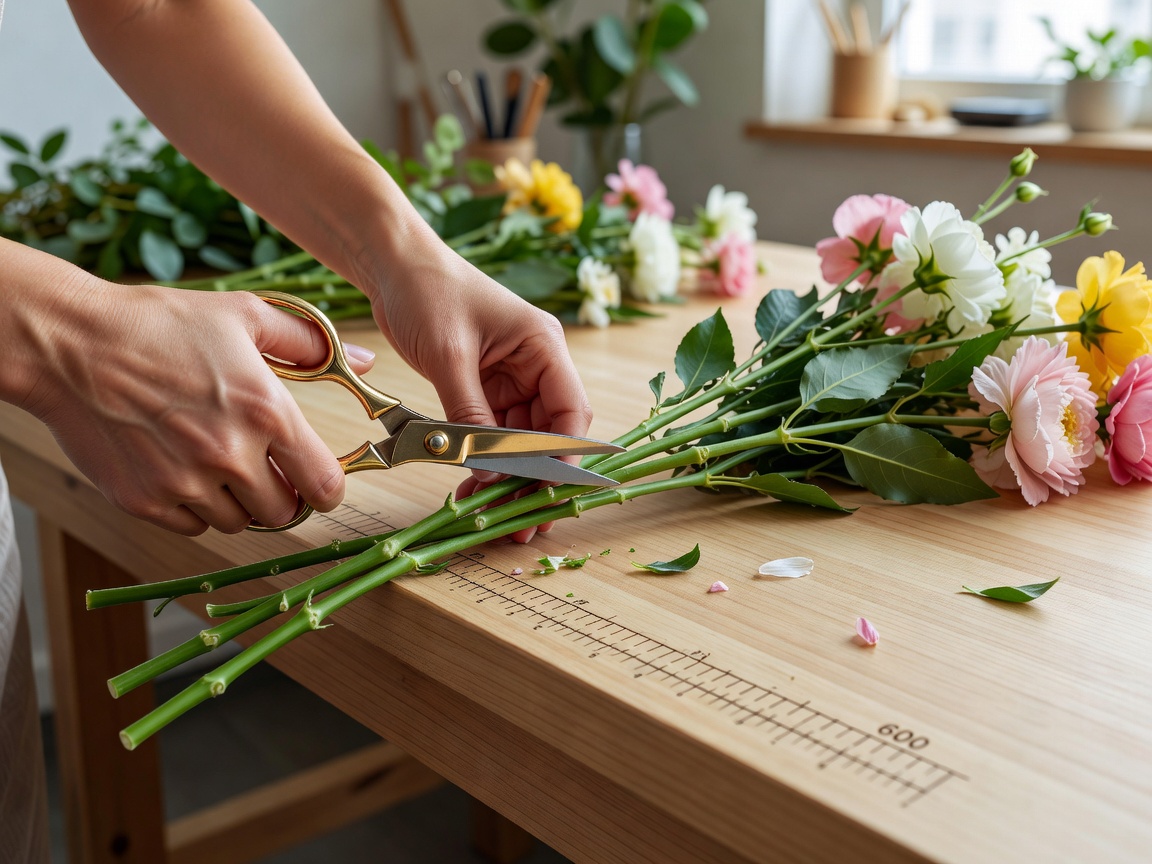
Never use blunt household kitchen scissors, which crush vascular capillaries shut like a clamped hose. Use a razor-sharp carbon floral knife or bypass pruner. Cut 2 to 3cm from the base at a clean 45-degree angle under a trickle of tap water. The angle quadruples the absorbing surface area and prevents the stem from sealing itself flush against the flat vase floor.
Total Submerged Leaf Defoliation
Foliage submerged below the waterline breaks down within twenty hours, turning the water into an anaerobic bacterial soup. Strip all leaves from the lower 50% of every stem. Leave only the upper structural leaves near the flower head.
Water Depth and Temperature
Unlike roses and woody shrubs—which benefit from deep, tepid water—tulips thrive in shallow, ice-cold water (only 5 to 7 centimeters deep in the vase). Deep water softens the fleshy tulip stem, causing it to rot and turn slimy. Top up with fresh, cold water every morning rather than filling the vessel high.
Ethylene Gas & Environmental Isolation
Never place your arrangement beside a fruit bowl containing bananas, apples, or citrus. Ripening fruit releases gaseous ethylene hormone, which triggers rapid senescence, premature petal shedding, and yellowing foliage in cut flowers. Keep bouquets away from direct radiator heating drafts and harsh direct afternoon sunlight.
Troubleshooting Botanical Challenges
| Symptom | Underlying Biological Cause | Atelier Solution |
|---|---|---|
| Drooping Tulip Neck | Air embolism inside the hollow calyx stem | Prick a single pinhole through the stem 1cm below the flower head; wrap in newspaper and submerge in cold water for two hours. |
| Cloudy / Foul Water | Bacterial decomposition of foliage | Scrub vase immediately; re-cut stems 2cm higher; refill with cold water and half a drop of natural citrus extract. |
| Bent Stems Toward Window | Phototropism (cells elongating toward light) | Rotate your vase 180 degrees every morning to encourage balanced, upward architectural growth. |
| Rose Petal Edge Crisp | Dry air from domestic heating systems | Mist foliage gently with a fine water atomiser; move away from convective radiators. |
Why We Do Not Recommend Artificial Preservative Packets for Tulips
Commercial flower food sachets are designed primarily for thirsty woody shrubs, chrysanthemums, and mass-market roses. They contain heavy glucose sugars formulated to force closed buds open. When applied to tulips, the glucose forces the stems to elongate at double speed, weakening their cell structure and causing them to flop prematurely. Clean, cold Amsterdam tap water, refreshed every 24 hours, is all a healthy Dutch tulip needs to thrive.