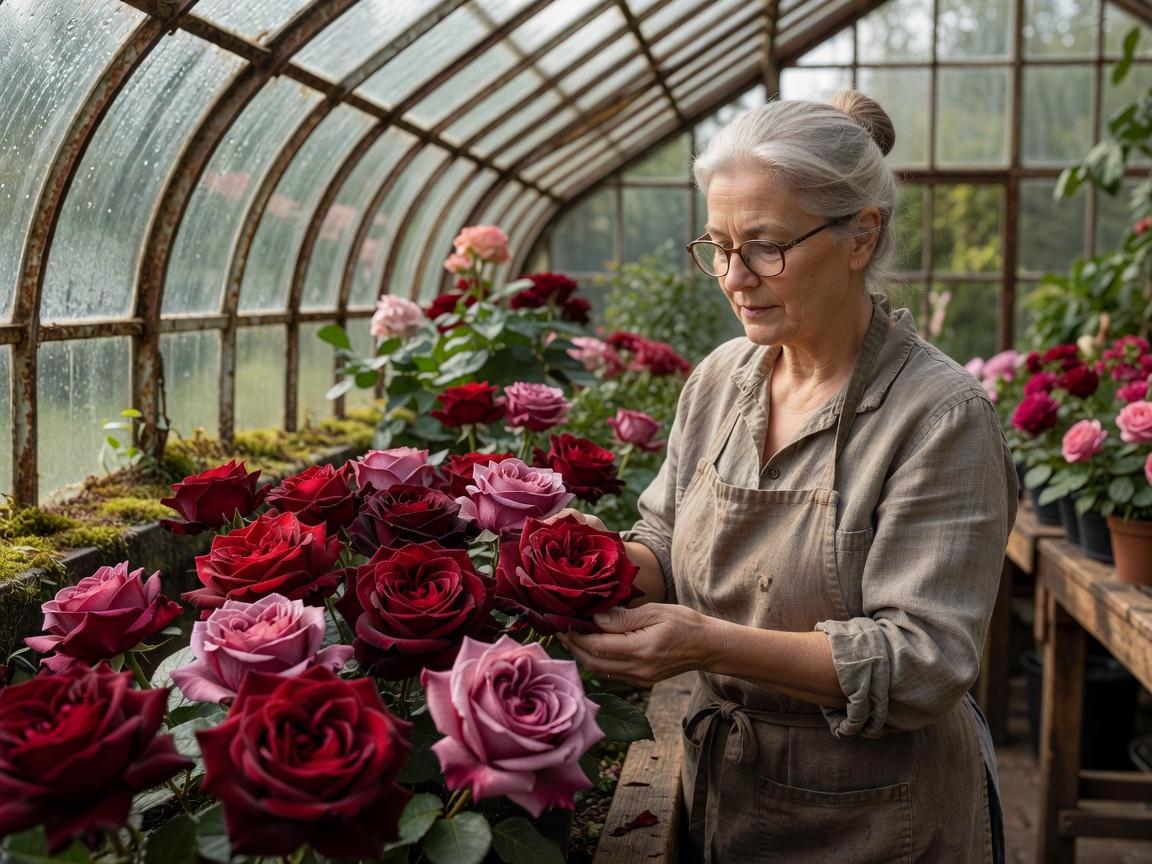
The Re-Invention of the Dutch Rose
For decades, global floristry surrendered scent for durability. Supermarket roses were bred solely to survive two weeks of intercontinental cargo holds inside dry chill boxes, losing their volatile essential oils, complex fragrance notes, and organic spiral openings in the process. The results were stiff, odorless floral plugs that snapped upon unfurling.
In response, Dutch horticulturalists across the Westland and Aalsmeer belts pioneered a quiet renaissance. By wedding antique English and French garden rose rootstocks to modern computerized Dutch glasshouses, growers reclaimed the intoxicating scents of damask, wild myrrh, citrus blossom, and honey. Jollystackfeedbrst sources solely from growers utilizing closed geothermal loop heating and beneficial parasitic insects (such as Phytoseiulus persimilis) rather than toxic aerosol pesticides.
Signature Varieties in Our Amsterdam Floristry
Each rose variety accepted into our Keizersgracht atelier must satisfy three rigorous benchmarks: a bloom caliper exceeding 9cm at full open, stem thickness capable of self-support without wire insertion, and minimum twelve-day active hydration retention.
Red Naomi!® Extra Superior
The unquestioned benchmark of Dutch red floristry. Boasting between 55 and 75 velvety petals per head, subtle tea-rose fragrance, and deep ruby hues that do not turn bluish or blacken as the flower ages. Its massive head opens symmetrically over a ten-day period.
- Stem Caliber: 70–80cm heavy
- Scent: Classic sweet damask
- Vase Life: 12–15 days
Kahala Peach Garden Form
A multidimensional botanical marvel shifting from dusty terracotta and warm apricot at the center to delicate champagne blush on outer guard petals. Its swirling cabbage-style bloom evokes seventeenth-century Dutch master canvases.
- Stem Caliber: 60–70cm
- Scent: Honeycomb & dried apricot
- Vase Life: 11–14 days
Structural Companions: Foliage and Textural Stems
A classic mistake in commercial rose arrangements is the reliance on plastic-looking leatherleaf fern or generic eucalyptus filler that sheds sticky sap. Our atelier pairs Dutch roses with native and European structural botanicals that enhance longevity and provide visual tension:
- Dutch Hedera Helix (English Ivy Trails): Hand-conditioned vines cut along canal courtyard brickwork, providing cascading fluidity over ceramic edges.
- Skimmia Japonica (Dutch Grown): Tight, dark red or lime-green micro-bud clusters that never drop pollen and remain pristine for three weeks.
- Salix Discolor (Pussy Willow): Velvety catkins sourced from wetland polders that add architectural height without crowding the rose canopy.
- Eryngium (Sea Holly): Steely thistle heads with silver-blue geometric bracts, providing textural friction against velvet petals.
Pros and Cons: Greenhouse Stems vs. Field Stems
| Factor | Dutch Geothermal Greenhouse | Open Field / Air-Freight Import |
|---|---|---|
| Carbon Efficiency | Zero-gas geothermal warmth + solar LED | High aviation fossil fuels & chilled logistics |
| Petal Resilience | Controlled humidity; high cellular density | Dehydrated during 4-day cargo transits |
| Fragrance Profile | Intact essential oils; cut at harvest peak | Chemically sealed; faint or absent scent |
| Chemical Residue | Integrated biological predator insects | Heavy systemic fungicides and dipping agents |
| Unit Cost | €3.20 – €4.80 per stem (Fair living wages) | €1.50 – €2.20 per stem (Low-cost labor) |
Atelier Conditioning for Rose Longevity
Roses possess complex xylem conduits that are especially susceptible to bacterial occlusion. When our couriers deliver your parcel, trim each stem under lukewarm running water at a sharp 45-degree angle. This prevents air cavitation (air bubbles entering the vascular channel) and ensures unhindered water uptake to the heavy flower head. Never smash stems with a hammer—an archaic myth that destroys vascular cell walls and breeds destructive water bacteria.